
 English


Investment return and principal value of security investments will fluctuate. The value at the time of redemption may be more or less than the original cost. Exchange Traded Funds (ETFs) are bought and sold through exchange trading at market price (not NAV), and are not individually redeemed from the fund. Shares may trade at a premium or discount to their NAV in the secondary market.
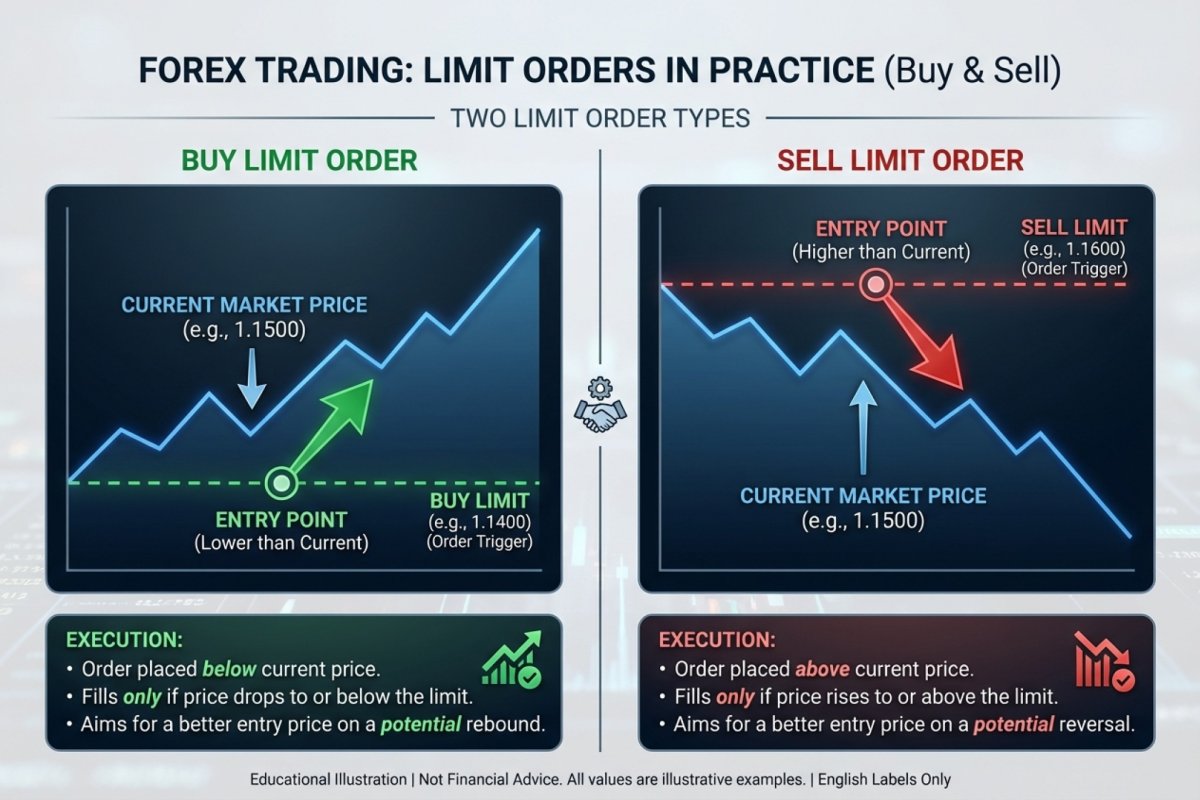
For large trades, traders on the desk can source shares from multiple ETF market makers. They can also trade in increments to manage the effect the trade could have on prices or obtain a quote to execute the entire trade. And they may determine that it’s a better trading strategy for the advisor to go through the desk rather than directly into the market. Because a limit order prioritizes price over timing, you may have to wait longer for a trade to execute, particularly when markets are unsettled. But a limit order has your back if market conditions suddenly change; the order will not execute if the market never reaches your specified limit. Additionally, a limit order allows you to assess markets in times of volatility and adjust your limit price.
How Do Trailing Stop Orders Help Me Lock in Profits?
They may not execute immediately (or at all), but they give you more control over the price you pay or receive. The information provided in this article is for educational and informational purposes only. It does not constitute financial advice, investment recommendation, or an endorsement of any particular investment strategy. Investors should conduct their own research and consult with a qualified financial advisor before making investment decisions. Day orders cancel automatically at market close if they don’t fill. Good-Til-Canceled (GTC) orders stick around, usually for up to 90 days, but some brokers may have different limits, so check your broker’s rules before placing one.
Building an Order Type Workflow

If the stock trades at the $27.20 stop price or higher, your order activates and turns into a limit order that won’t be filled for more than your $29.50 limit price. You want to purchase a stock that is currently trading at $20.50 a share. Since you think the price will continue to rise, you decide you’re willing to buy if it increases to $22.20 a share, and you place a buy stop-loss order with a stop price of $22.20.
- Please note Brokerage would not exceed the SEBI prescribed limit.
- You want to buy or sell, and you want it to happen immediately.
- With a few simple steps, low-volume ETFs can trade efficiently—unlocking opportunities that many investors overlook.
- If your order represents a meaningful percentage of the stock’s typical volume, a market order can move the price against you.
- That’s why a market order is expected to be filled instantly.
- Don’t set stops so tight that they trigger on normal movement.
Slippage Factors You Can Control
Start small, practice regularly, and don’t be afraid to make mistakes with small amounts of money. Every professional investor started exactly where you are now, learning these same basic concepts one step at a time. The best way to master order types is through experience. Start with small trades, keep detailed records of your orders and their outcomes, and gradually increase your trading size as you become more confident. Practice with paper trading (simulated trading with fake money) to get comfortable with different order types without risking real money. Even small slippage adds up to significant costs over time.
Integrating Stop Loss and Take Profit
Add margin and leverage into the mix, and choosing wisely becomes even more crucial. In the trading landscape, the choice between market orders and limit orders can drastically influence investment outcomes. Each order type offers unique advantages and is suitable for different trading goals and environments. By understanding the mechanics behind each and applying them strategically, investors and traders can optimize their trading approaches and enhance their overall investment performance. In the fast-paced world of trading and asset management, understanding the distinctions between different types of orders is essential for both novice and experienced investors.
Final Verdict: Match Order Type to Trade Context
Maybe you own Netflix at $500, but you want to sell at $550. When (and if) the stock hits that price, your shares sell automatically. Stop-limit orders help to manage risk, allowing you to execute trades only under favorable conditions. However, remember that execution is never guaranteed if the market moves too aggressively. This material should be viewed as a solicitation for entering into a derivatives transaction. Trading futures and options involves substantial risk of loss and is not suitable for all investors.
During fast adverse moves (news events, gap opens), stop slippage can be 5-20x normal during the brief window when stops trigger together. This slippage is structurally unavoidable with stop market orders; the trade-off is execution certainty against slippage exposure. For beginners, it’s often best to start with market and limit orders to get a feel for the market. Advanced traders might find stop and stop-limit orders more useful for managing risk and executing complex strategies. Key factors to consider when choosing an order type include your trading objectives, risk tolerance, and the specific market conditions you’re facing.
Investment Banking Foundation
Most retail traders skip the audit because order type doesn’t feel important; the data shows it’s worth more than most strategy optimizations. There is no single order type beginners should always use. The choice depends on whether execution speed or price control matters more, plus the asset, liquidity, trading session, and broker rules. Beginners should verify order mechanics with their broker and practice before using live capital. For low-volume stocks, a limit order may not fill for some time. So when placing a trade, Stake investors will also have the option to choose whether the order should be cancelled at the end of the day (EoD) or after 30 days, which is also known as a Good ’Til Cancelled order (GTC).
Order Execution Preferences
ICICI Securities may also discontinue or suspend or terminate Services/ facilities without prior notice if these Terms and Conditions are breached. If the trader tries to place an order for 1,200 quantities in one go, the order will be rejected. Other market participants will see all those aggressive Long orders and they will start to join in the party thus creating a snowball effect. This is how the manipulation works – through Market Orders. If they had been accumulating a huge Long position on the EUR/USD, then they need to push it upwards – into an uptrend. Trade Brains is India’s trusted financial and business news portal.
Market Orders: When Speed Matters More Than Price
During earnings announcements and major news events, be prepared for rapid price changes that can affect all order types. Stop-loss orders may fill with significant slippage, and stop-limit orders may not fill at all. During high volatility, consider using wider limit fxverge safe prices or market orders for urgent exits. Spreads widen during volatility, making tight limit orders less likely to fill when you need them most. You can enter a trade with a limit order and place a market order to exit (or vice versa).
How to get the best price for your trades?
You know exactly what you’ll pay (at most) or receive (at minimum). Your order might sit there all day like a wallflower at a dance, never getting filled. There’s also the stop-buy order, which works in the opposite direction. Traders use this when they want to buy a stock once it breaks above a certain price, like catching momentum as it takes off. If you are going to engage in any trading activity with Futures on Virtual Currencies including Bitcoin, please view NFA & CFTC advisories providing more information on these potentially significant risks. So you can specify a limit order along with a stop order.
With a buy limit order, you set the maximum price you’re willing to pay. With a sell limit order, you set the minimum price you’re willing to accept. During earnings reports or breaking news, prices can swing wildly. A market order that should cost you $50 might execute at $52 or $48.
